top of page

Tales of the twisted
podcast
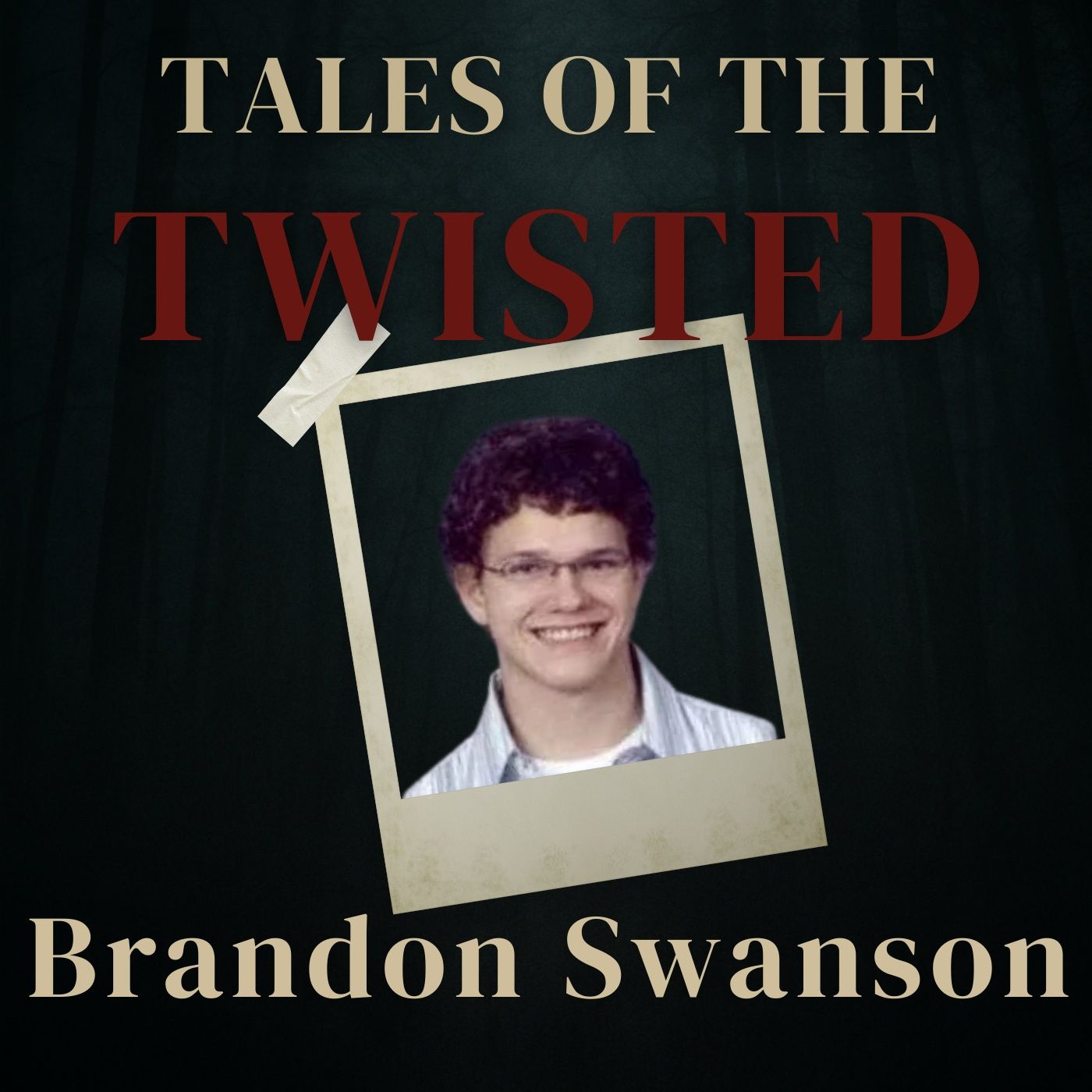
Brandon Swanson: The 47-Minute Call to Nowhere
Episode Title:
Full Transcript
The darkness came down heavy over western Minnesota that night. Not the kind of darkness you get in cities. You know, it's thin, diluted by street lights and headlights and never fully settling. This was rural darkness. True darkness. The kind that swallows the horizon and leaves the world feeling unfinished. the kind that makes the air itself feel heavier. And somewhere in that darkness, a young man walked alone along a gravel road. His phone pressed to his ear.
19-year-old Brandon Swanson spoke calmly, trying to guide his parents to him, describing fences and fields and lights that shimmerred on the horizon. lights he believed belonged to the town of Lind. Lights he believed were pulling him closer to home. His parents searched for him, driving slowly up and down rural roads, headlights cutting through the emptiness, hearts pounding with the feeling that they were close, so close to finding their son.
For 47 minutes, they stayed linked by that fragile connection. Just a phone line, the night and the faint rhythm of Brandon's footsteps. Then suddenly, a stumble, a sharp breath, a jolt of surprise, and two chilling words. Oh [ __ ] The line went dead, and the darkness swallowed him whole.
This is Tales of the Twisted. True stories of the strange, weird, and bizarre. Before the Mystery, before the silence, before the vanishing, there was just a day like any other. Brandon Swanson lived with his parents in Marshall, Minnesota, a small town nestled among fields and long, straight, rural roads that seemed to stretch forever. The kind of place where everyone knows everyone. A place where nothing really happens until something does. Brandon was the kind of kid who didn't make waves. He was smart, polite, responsible, close with his parents, the kind of young man who answered calls on the first ring, and always let his parents know where he was going. He studied wind turbine technology at a local technical college. The kind of practical, steady career path that matched his personality.
On May 13th, 2008, Brandon finished his final exams. He texted friends, made plans, went out to celebrate the end of the school year. A couple hours, small gathering, no drama, nothing unusual. He said goodbye, got in his car, and began the drive home. just a teenager driving through quiet farmland after midnight. A simple familiar route. He had no way of knowing that every mile he drove was taking him further into the heart of a mystery still unsolved 16 years later.
Just after 1:30 a.m. on a rural back road, Brandon made a turn he'd taken before. But tonight it was different. No moon, no ambient light, no clear horizon, just a wall of darkness. In rural Minnesota, the roads can be deceptive. One wrong angle and a car can slip into a ditch with barely a jolt. And that's exactly what happened. No crash marks, no skid marks, no damage. His tires simply sank into loose gravel and mud. He tried to reverse. The wheel spun. He tried again. Same result. So he did something simple, something reasonable. He called home.
His parents woke to the sound of his voice. Calm, clear, not scared, not hurt, just uh annoyed. He told them where he thought he was. I'm stuck near Lind. He described lights in the distance. Lights he believed were the edge of town. He told them he'd wait by the car, but after 10 minutes of driving around, his parents didn't see him, didn't see his headlights, didn't see any sign of a car in the ditch. And that's where the night began to bend.
Brandon insisted he was near Lind. His parents insisted they were driving every road around Lind. The truth was that neither of them were anywhere near the other. But they didn't know that. And so the call continued. Brandon finally said, "I'll walk towards the lights. You meet me there." That decision, innocent, reasonable, understandable, is the reason I'm telling this story today. He began walking down a gravel road, phone in hand, talking to his parents as they slowly drove the opposite direction, scanning the dark fields for any sign of movement. The call lasted almost an hour. And in that hour, the world outside the phone call disappeared.
His parents heard everything. His breathing, his steady footsteps, the crunch of gravel, his calm voice, his certainty about where he was going. But they heard something else, too. wind, a faint rustling, signs that Brandon wasn't on a paved road, but on something less maintained, something more isolated, something further from civilization than any of them realized. Anyone who's walked a rural road at night knows what darkness truly is. But there's a special kind of darkness unique to Minnesota farmland. It erases the horizon, hollows out the landscape, takes away every landmark you rely on during the day.
Brandon described as seeing lights in the distance. Lights he believed were Lind. But the phone tower data would later show they weren't Lind. They weren't any town at all. They were likely farm security lights farther away than they appeared, distorted by the cold night air. Every step Brandon took was taking him further from where he thought he was. Further from safety, further from home, further into the maze of farmland, where every direction looks the same. And still his voice stayed calm even after nearly an hour of walking. Even as he climbed fences, navigated fields, crossed uneven ground, and moved deeper into the rural landscape. His parents told investigators later he didn't sound scared. He didn't sound lost. He sounded like he knew exactly where he was. But he didn't. and neither did they.
At 2:40 a.m., the conversation shifted. Brandon stopped talking for a moment. The wind grew louder on the line. His breathing changed. Then a foot slid, a sudden gasp, a grunt of impact, and the words, "Oh shit." The call ended abruptly. Not dropped, not drowned, not crushed, just ended. His parents called back again and again and again. No answer. And the silence that followed has lasted for 16 years. When the call went silent, Brandon's parents, Brian and Annette, didn't panic immediately. They thought the phone fell. They thought the battery died. They thought he dropped it into the grass and couldn't find it in the dark. So they kept driving slowly, windows down, flashlights sweeping the ditches, calling out for him. Brandon, Brandon, we're right here. But each call echoed into the darkness, untouched, unreturned.
Minutes turned to an hour, then two, then three. By the time dawn began to lift the sky, the last thin strand of hope had frayed into fear. They drove home shaking, exhausted, and terrified, and called police. If you've ever wondered what the most painful moment of the story is, it's this one right here. Because Brandon was 19, legally an adult, the police didn't treat his disappearance as an emergency.
They told his parents, "Ah, he's probably sleeping it off. He'll turn up. He's a grown man. He probably doesn't want to be found right now." Brian and Annette tried to explain. He's not that kind of kid. He wouldn't run away. He stayed on the phone with us with an entire walk and he just vanished. But it didn't matter. They were told to wait. And so for hours they sat with a silence that didn't make sense. A silence that shouldn't have existed. A silence that meant something was terribly wrong. It would be 7 hours before authorities officially joined the search. 7 hours Brandon never should have been alone.
At 12:30 p.m. deputies located Brandon's car. Not in Lind, not anywhere near where Brandon believed he was. Instead, his car sat in a ditch near Taton, Minnesota, 25 miles from where his parents had searched. The car wasn't damaged, the grass wasn't disturbed, and the ground wasn't torn up. It looked like a car that had simply slid off the road and come to rest peacefully in soft soil. And that's what made it so chilling because Brandon had walked away calmly because he believed he could walk home because nothing about the car indicated danger and because it meant the entire 47 minute call was based on a mistaken sense of direction. He wasn't where he thought he was and his parents weren't anywhere near him. They had never been close, not even once.
Blood hounds were brought in. Search teams lined up in grids. And for the first time since Brandon vanished, there was a direction, a scent, a path. The dogs followed his trail from the car along a gravel road, through a patch of dirt and tall grass, past a wire fence, and toward a slope. The ground slanted downward into a shallow depression where fields met the edge of the yellow medicine river. Here the dogs paused, their noses in the grass, their body their bodies angling toward water. Brandon had been here. This was real. He had crossed this exact patch of earth while talking to his parents. The dogs continued moving toward the river. And then something astonishing happened. They crossed to the other side.
Searchers still debate this moment. Some believe Brandon physically crossed the river. Others believe he walked near the riverbank close enough for the dogs to read the scent across the water. But everyone agrees on one thing. This was the beginning of the true mystery. Because the scent on the far side of the river continued for a few hundred yards through weeds, brush, and open farmland and then vanished completely as if he had stepped off the earth. No tracks, no clothing, no signs of a fall, no sign of a crawl, no torn earth, no disturbed foliage, no dropped phone, no blood, nothing. Dogs circled, turned, looped, rechecked. The trail ended in a place where nothing ends.
And if you've never stood in the middle of a Minnesota field, let me describe it to you. There is nothing to hide behind, nothing to block scent, nothing to erase footprints, and nothing to swallow a person whole. And yet something did. To understand how someone can vanish in plain farmland, you must understand the hidden dangers beneath it. In this part of Minnesota, there are abandoned wells, old sisturns, slurry pits, root sellers, sinkholes. You get the idea. Many of these hazards are covered by grass, partially buried. They look like flat ground or visible at night, and some are even forgotten by the current land owners. A person can step onto what looks like solid earth and drop 10 ft through rotted wood. A person can walk across an old well cap and fall into darkness.
A person can step into a slurry pit and sink silently within seconds. A person can slip on a hidden slope and tumble into water, mud, machinery, or a hole. All without making noise that carries in the wind. all without leaving a trace by the time the sun rises. It's not dramatic. It's not cinematic. It's quiet, instant, final, and painfully plausible because the scent trail didn't fade. It just stopped abruptly. The kind of stop that suggest a sudden vertical drop or transition into a space where scent cannot travel.
Imagine the final moments. Brandon is walking, phone to his ear, listening to his father's voice, trying to make sense of his surroundings. He sees lights on the horizon, the lights he believes belong to a town. He's exhausted, cold, confused, mentally unraveling from sensory deprivation. He climbs a fence. He stumbles down a hill. He crosses the damp ground near the river. He keeps heading toward the lights that never get closer. He climbs another slight incline. The dogs later track every inch of this. Then somewhere in that open field, the earth changes beneath his foot. A shift, a hole, a weak point, a depression, something unexpected, something startling. He loses balance, inhales sharply, grunts. Oh [ __ ] And the line goes dead.
Somewhere beyond that point, in the dark, in the wind, in a stretch of farmland no one can perfectly map, Brandon disappears. Search crews poured into the area surrounding Taton. Local deputies, firefighters, volunteers, friends, and strangers. People brought trucks, ATVs, horses, drones, thermal imaging devices, dogs, any tool that might help find a young man who had simply walked into the night and never walked back out. But from the beginning, the land fought against them. Minnesota farmland shifts. It kind of breathes. The ground rewrites itself every season. Tall grass in the spring, corn in the summer, snow in the winter. Every year it becomes a different landscape. A landscape capable of swallowing anything and keeping it.
If you've never walked farmland like this, you might imagine soft earth and clear paths. But the truth is it's full of traps. Not intentional traps, just natural ones, historical ones. Ones left behind by generations of farming. Searchers cataloged everything they could. Shallow creek beds, holes made by erosion, collapsed underground chambers, abandoned well shafts, and so on. Any one of these could take a person down with no warning. And at night, they're invisible. A young man could step into one and vanish silently, leaving no trace by morning. And that's the hardest part of the story. There is nothing poetic or cinematic about accidents like these. They happen fast, quietly, without a witness. Just a foot in a wrong place, a shift of weight, a collapse, and the world closes over you.
16 years later, investigators rarely speak publicly about the Brandon Swanson case, but when they do, they choose their words carefully. They say, "We don't believe Brandon was the victim of foul play. We don't believe he drowned. We don't believe he walked away intentionally." They say we believe he suffered an accident, a fall into a location we haven't found. Places where the scent stops abruptly. Places where sonar can't penetrate. Places where vegetation covers everything by sunrise. Places where a body may never surface. Places too numerous for searchers to inspect one by one. Places the land has reclaimed.
Every spring when the snow melts and the rivers run swollen and brown, Brian and Annette Swanson return to the fields. They walk the same routes the dogs traced years earlier. They carry sticks, flipping over brush and debris. They talk quietly and they look, always looking for a shoe, for a phone, for a stitch of clothing, for anything that belonged to their son. 16 years of searching. 16 years of birthdays and holidays passed with an empty chair. 16 years of wondering what was waiting on the other end of that phone call. 16 years of imagining every possibility, every direction, every hazard, every step. 16 years of grief that never found a place to land.
Brandon's mother once said, "It's not the not knowing, it's the never knowing." If there's any light in this story, it's this. Brandon's disappearance changed the law. Before his case, police could refuse to search for missing adults because adults have rights to disappear. Brandon's parents fought that mindset and won. In 2009, Minnesota passed Brandon's Law, which requires immediate police response to any missing adult case, mandatory risk assessment, no waiting period, full cooperation between agencies, and activation of all available resources without delay. Because if authorities had taken the call seriously, if the search had started immediately, if the delay had never happened, maybe things would have been different. Brandon's law ensures no one else pays that price. His legacy is written in the protection it now gives others.
Many theories of his final moments exist. Many explanations have been debated, but the truth is far simpler and far more tragic. The call ended because something startled him. A fall, a slip, a sudden change beneath his feet. Something unexpected, something quiet, something final. He wasn't scared. He wasn't running. He wasn't hiding. He was confused about danger. He didn't even have time to be afraid. Just two final words. Oh [ __ ]
A young man surprised by whatever came next, whatever took him away from the world in the breath between one step and the next. And then silence. A silence that has lasted for over a decade. A silence that still hangs over fields that look ordinary in daylight but hide their secrets in the dark. Brandon's story lingers because it's simple and terrifying and very real. It's the nightmare that doesn't need a monster. It doesn't need a villain and it doesn't need a conspiracy.
It's the kind of story where the world itself becomes the threat. The kind of story that reminds us that sometimes the most frightening mysteries are the ones rooted in reality. the ones that feel familiar, possible, and heartbreakingly human. Brandon didn't vanish into thin air. He vanished into a night that was too dark, too quiet, and full of too many hidden places. And some of those places never give anything back.
This has been Tales of the Twisted, true stories of the strange, weird, bizarre. If this story stayed with you, if it unsettled you, if you found yourself imagining that long walk into the dark, follow the show. Please rate it, share it, and support the stories that remind us how easily ordinary life can slip into the unknown. Join me next time for another true story that twists its way into darkness.
bottom of page