
Tales of the twisted
podcast
The Hex Hollow Murder: Magic, Fear, and a Curse
Episode Title:
Full Transcript
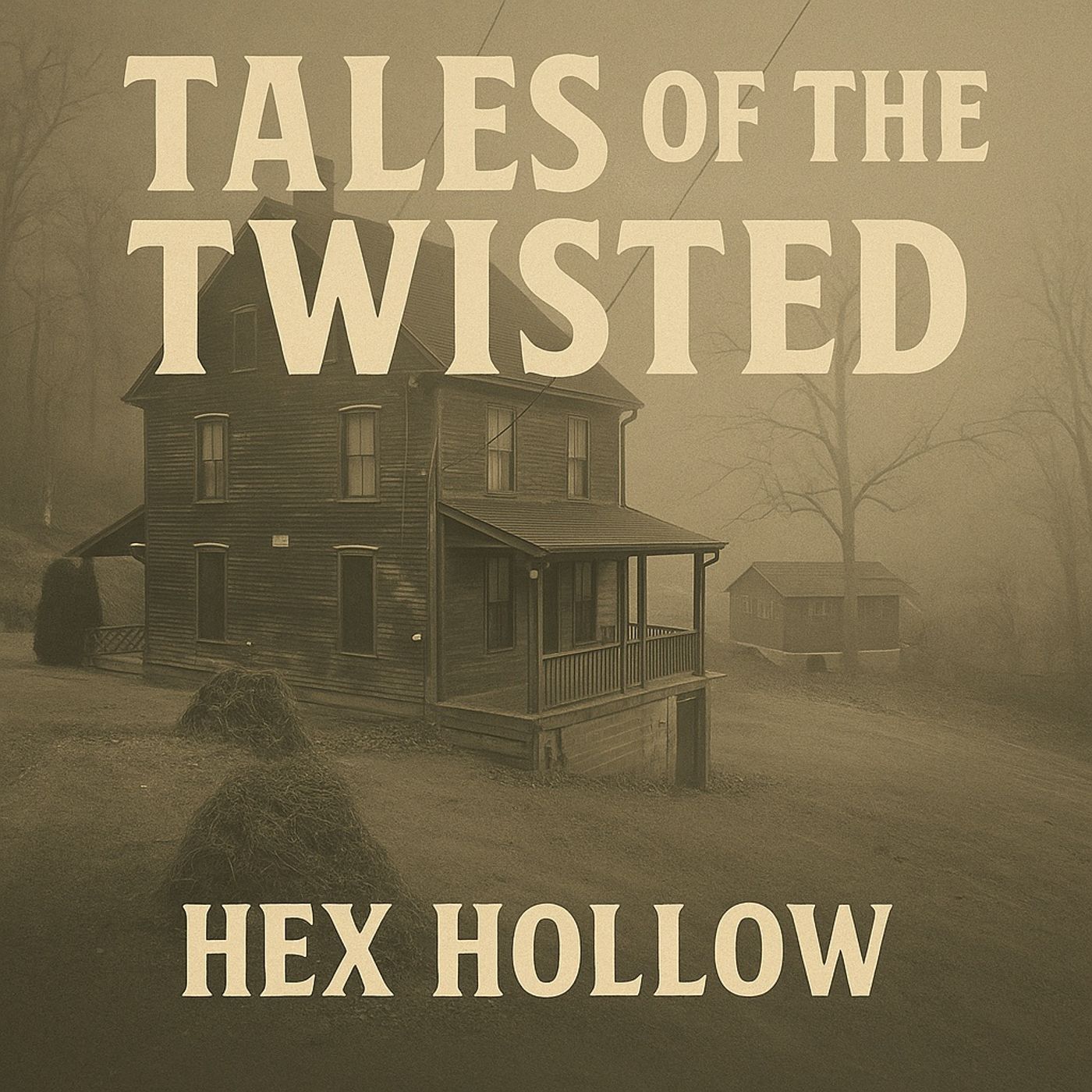
The old farmhouse sat alone at the top of a Pennsylvania ridge. Dark, quiet, and surrounded by woods so dense they say it swallowed the moonlight. Locals called the area Hex Hollow, a place whispered about for generations, a place where curses were feared, pow-wow magic was practiced, and strange happenings clung to the land like a shadow.
On a cold night in November of 1928, three men climbed that hill, believing they were walking toward the source of a deadly spell. They carried lanterns, kerosene, and a desperation that had grown into terror.
Hours later, that farmhouse was burning. And inside lay the body of the man they believed had cursed them—a farmer named Nelson Rehmeyer.
What drove them wasn’t revenge. It wasn’t greed. It wasn’t hatred. It was fear. Fear of a curse. Fear of a man they believed held supernatural power. Fear of a darkness they claimed was suffocating their lives.
This is the true story of the Hex Hollow murder—where folklore, superstition, and belief collided so violently that a community has never forgotten it, and the land has never escaped it.
This is Tales of the Twisted—true stories of the strange, weird, bizarre, and eerie. Today, we descend into the fear, the folklore, and the lingering hauntings tied to one of America’s most unsettling crimes: the Hex Hollow murder.
In the early 1900s, southern Pennsylvania was a crossroads of modern life and old-world belief. Farmers worked the land by day, and by night many turned to pow-wow, a centuries-old form of folk healing carried by Pennsylvania Dutch immigrants.
Pow-wow wasn’t dark magic. It involved prayers, charms, remedies, and protective rituals. But like any belief system, fear distorted it. Misfortune could quickly be blamed on a hex—a curse cast by someone with knowledge of darker traditions.
And in York County, one name circulated whenever illness struck or livestock died: Nelson Rehmeyer.
To some, he was simply a quiet, reclusive farmer. To others, he was a man who “knew things,” a man with an old and powerful copy of *The Long Lost Friend*, a book believed capable of granting protection—or harm.
Stories about him weren’t shouted. They were whispered. Softly. Carefully.
Into this world stepped John Blymire, a factory worker whose life had become a chain reaction of sickness, sleeplessness, and unexplainable bad luck. He believed something was draining him physically, emotionally, spiritually.
Doctors offered no answers. Pastors offered no relief. So he returned to pow-wow.
A folk healer listened to Blymire’s troubles and delivered the verdict he feared most:
“You’ve been hexed.”
And according to the healer, the man responsible was Nelson Rehmeyer. The curse, he said, could only be broken if Blymire obtained a lock of Rehmeyer’s hair and his copy of *The Long Lost Friend*.
To Blymire, this wasn’t superstition. This was survival.
Blymire couldn’t break the supposed curse alone. He found two others who believed they were also under supernatural attack: John Curry, a frightened 14-year-old boy, and Wilbert Hess, a man convinced his family’s misfortunes were rooted in dark magic.
Three men, united by fear.
On the night of November 27th, 1928, they walked the narrow path up Rehmeyer’s Hill, lanterns flickering in the cold wind. The woods around them were thick with silence, broken only by the crunch of leaves and the sound of their own anxious breaths.
To them, this wasn’t a murder plot. It was a mission—to break a curse that felt as real as the ground beneath their feet.
Rehmeyer greeted them calmly. He let them in. Offered them a place by the stove. He didn’t argue. He didn’t resist. But when the men couldn’t find the book, panic took over.
The line between fear and violence dissolved in an instant.
They attacked Rehmeyer, killing him on the floor of his own home. And in their terror-driven logic, the curse was still active. So they poured kerosene through the house, believing fire would destroy whatever supernatural power remained.
But the house didn’t burn.
It smoldered—singed, blackened—but it refused to be consumed. Some in the community later claimed this was proof of Rehmeyer’s powers, a strange protection, a sign that the curse didn’t end with his death.
Whether superstition or coincidence, the fire’s failure became part of the legend forever.
The trial made national headlines. Three regular working-class men had killed someone not for money or hatred, but because they believed he held supernatural power over them.
All were convicted. None were executed. But the legacy of Hex Hollow had only begun.
For decades afterward, stories spread of strange activity on Rehmeyer’s Hill. Visitors reported hearing footsteps circling the property at night—slow, steady, pacing—with no visible figure attached.
Others claimed to see floating lights, like old lanterns swinging between the trees, though no one was there to carry them.
Some described the smell of smoke drifting across the hill—thick, bitter, unmistakable—even though the fire had burned nearly a century earlier.
Photographers reported cameras refusing to work, batteries draining instantly, shadows appearing in the windows of the rebuilt farmhouse—even when every room inside was empty.
Locals swore the land itself felt heavy, as though it remembered what happened.
The Rehmeyer family eventually rebuilt the house and preserved it as a historical site. They do not believe Nelson was a witch—but even they admit the property has an atmosphere that’s difficult to explain.
Is it haunting? Is it history? Is it a community still wrestling with guilt and folklore?
Whatever the explanation, Hex Hollow remains one of the most chilling crime sites in America—not because of the supernatural, but because belief alone drove ordinary people to kill.
Belief created the curse. Belief fueled the murder. Belief is what keeps the legend alive.
I myself am from York, Pennsylvania. I grew up hearing countless stories about Rehmeyer’s Hollow. In the 1980s, they even held haunted tours there—scary trail walks through the woods.
One of the most fascinating stories I heard as a kid was that when they burned his body, it supposedly burned a hole through the floor, and no matter how many times they repaired it, a blackened mark always returned.
I have no idea if that’s true. I doubt it. But these are the kinds of stories that floated through York County.
You’ve been listening to Tales of the Twisted—true stories of the strange, weird, bizarre, and eerie. If this episode pulled you into the shadows of Hex Hollow, be sure to follow the show, subscribe, and leave a rating and review. It helps the show grow and keeps these unsettling stories alive.
Join me next time as we uncover another case where reality twists into something far darker than fiction. Until then, stay curious, stay cautious, and stay twisted.